Showing posts with label Information Therapy. Show all posts

Wednesday, July 25, 2012

Healthwise - Success Story


Healthwise®  Success Story Prescription-Strength Information TM  for Every Health Decision 


Strange feeling leads to internet search Healthwise®  Knowledgebase helped him take his symptoms seriously and get to the hospital on time 

After a fun-filled weekend, you might not be too concerned if you woke up feeling strange on a Monday
morning. But for Simon Hymas, a 34-year old advertising executive in New York City, it was more than a case of the “Mondays.” He felt disoriented. His balance was off. And he felt numbness in his right hand. 
Despite feeling bad, he carried on with his morning routine. Thinking it might help him feel better, Simon took a shower. Things got worse. “I never felt like that before,” Simon told Healthwise. “So I decided to check out my symptoms on WebMD.” WebMD licenses the Healthwise Knowledgebase. 
He typed how he felt into the symptom checker. The results suggested a number of conditions associated with his symptoms, including a stroke. Believing a stroke was out of the question at his age, Simon wasn’t sure what to think. 
Simon has never worried too much about his health. But that morning he felt he had three choices: go to work, call his doctor to make an appointment, or go straight to the emergency room. The Internet information motivated him to go to the emergency room.  

With his wife at his side, he walked the four blocks to the hospital. During the admission process, Simon’s state of mind was disbelief. “I kept thinking that this won’t take long and I will go back to work,” he recalled.  
During the examination, once again Simon felt terribly dizzy and numb. The clinicians immediately set off the
neural alarm, and that’s when everyone, including Simon and his wife, realized he was having a stroke. Because Simon was at the hospital at the right time, the doctors were able to administer tissue plasminogen activator (tPA), which can help dissolve blood clots and reduce the amount of damage caused by a stroke.  
After spending two days in the ICU, six weeks in the hospital, and six months in physical therapy, Simon is well on the road to recovery.  
Throughout the rest of his recovery, Simon can turn to Healthwise content on the Web to help him answer
questions, prepare for appointments, and understand test results. Just as the information motivated him to go to the emergency room, having the right information at every moment in his care will continue to help him with his recovery and allow him to keep making better health decisions about other health issues. 


Tuesday, May 15, 2012

Information Therapy - Restless Relatives


Watch this short video and pass it to each contact on your email list.  Lets’ create awareness and make this video go viral !


Information Therapy is not just for patients. Its for relatives too !

Traditionally, Indian patients were passive and were quite happy to leave all medicaldecisions to the doctor.

However, times have changed, and internet positive patients are hungry for information and want to work in partnership with their doctor.
This is a huge challenge -- and a great opportunity as well. We feel patients are the largest untapped healthcare resource and that Information Therapy is Powerful Medicine !
What can we do to persuade doctors to prescribe Information Therapy routinely?
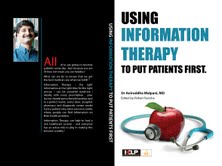
Relatives (and the patient's visitors) are potential customers. Why not educate them about health and illness? The most effective way of doing so is by setting up Patient Education Resource Centers (PERC) in the hospital As Indian hospitals strive to attract medical tourists and match global standards, documenting that patient education has been provided is going to be an integral and indispensable part of patient care. The PERC will become an important department of the hospital.  Contact us to set up a Patient Education Resource Center. Read More… Using Information Therapy To Put Patients First !


Find us on
Health Library BlogHealth Library on YouTubeHealth Library on TwitterHealth Library on FacebookHealth Library on OrkutHealth Library Events CalendarHealth Library on PicasaHealth Wiki

Thursday, May 10, 2012

Information Therapy - Dial 'D' for Doctor


5 reasons to make this video go viral
– its funny, its very helpful, its amazing and its spectacular
So go ahead and spread good health !

Watch this short video and pass it to each contact on your email list.  Lets’ create awareness and make this video go viral !

INFORMATION THERAPY

What to do when you realize that you have missed a dose of your medicine? Dial 'D' for Doctor !

Do you use complicated medical terms which sounds like Greek and Latin to your patients ? Why should you use Information Therapy ?

Traditionally, Indian patients were passive and were quite happy to leave all medicaldecisions to the doctor.

However, times have changed, and internet positive patients are hungry for information and want to work in partnership with their doctor.
This is a huge challenge -- and a great opportunity as well. We feel patients are the largest untapped healthcare resource and that Information Therapy is Powerful Medicine !


Just because you haven't been trained as a doctor doesn't minimize the important role you play in preventing errors with regard to your medicines, or those for your family! As the patient (or the caregiver), you have a great deal at stake in the success of your drug therapy and should assert your right - and your responsibility - to ask relevant questions. By the very process of asking questions about your medicines, you understand why you are taking them, how to take them, and what to expect so that you can detect potential errors. Ask your doctor, chemist or nurse questions about the medications. You should completely understand your health problem and what you can expect from the medicines. Read More…..
Find us on
********


Read the Book:  Using Information Therapy to Put Patients First

Wednesday, May 2, 2012

Information Therapy - Communication Confusion


5 reasons to make this video go viral
– its funny, its very helpful, its amazing and its spectacular
So go ahead and spread good health !

INFORMATION THERAPY


Watch this short video and pass it to each contact on your email list.  Lets’ create awareness and make this video go viral !
                        
Do you use complicated medical terms which sounds like Greek and Latin to your patients ? Why should you use Information Therapy ?
Traditionally, Indian patients were passive and were quite happy to leave all medicaldecisions to the doctor.
However, times have changed, and internet positive patients are hungry for information and want to work in partnership with their doctor.
This is a huge challenge -- and a great opportunity as well. We feel patients are the largest untapped healthcare resource and that Information Therapy is Powerful Medicine !

Subscribe to Patientpowervideos:
Health Library on YouTube


Patients often complain that they can never understand anything their doctor says. This usually because doctors use medical jargon --- but you should never get intimidated by this! You just need to remember that such jargon is simply a convenient shorthand which doctors ( and other health care professionals) use to communicate with each other. Since these words are often derived from the classic languages ( Greek and Latin), they may sound unfamiliar and difficult to understand, but if you devote enough time and take enough trouble, you can definitely do so. Remember that it's not a secret code which is being used to keep you in the dark! If you have difficulty in understanding medical terms, you can ask your doctor to help you. … Read More


Find us on
Health Library BlogHealth Library on YouTubeHealth Library on TwitterHealth Library on FacebookHealth Library on OrkutHealth Library Events CalendarHealth Library on PicasaHealth Wiki

Read the Book:  Using Information Therapy to Put Patients First


Wednesday, September 21, 2011

Producing content for delivering Information Therapy in India – opportunities and challenges

2nd Annual Conference

Using Information Therapy to Put Patients First
Free Registrations: www.patientpower.in


Mr Parag Vora, CEO, PEAS. www.peasonline.com

Ram Khare, a security guard in a Mumbai suburban society, visits a doctor for his chronic cough, which is diagnosed as ‘bronchitis’. His doctor gives him medicines along with printed material on how bronchitis can be managed effectively. This handout is in three languages – English, Hindi, and Marathi. However, that doesn’t solve the issue. Ram Khare can’t read or write. How does Information Therapy come to the rescue here?

“Effective patient education ensures that patients have sufficient information and understanding to make informed decisions regarding their care.”
American Academy of Family Physicians’ Guidelines for Patient Education

In order for Information Therapy to be effective, the patient education materials used must be both accessible and understandable. Whenever I pose a simple question to doctors about their approach towards patient education and what tools they use for this purpose, their knee-jerk response is – ‘We use print material’. Printed material indeed is one of the most commonly used forms of patient education worldwide. They are either in the form of typical handouts given to patients by healthcare professionals or can be accessed via various health websites. These materials are and always will continue to be one of the most cost-effective methods of patient education for the masses. I am not contesting the efficacy of printed material but I am sure that this not always the best solution in poor countries where health illiteracy is so widespread, and where many health education materials are difficult to understand. This is especially true in India which is many countries within a country! As a result, we miss out on harnessing the power of patient education. Hence it is important to apply a patient-centered approach to developing patient educational material.

As a company involved in developing effective patient education material, we have come across various challenges and situations which have helped us create some simple yet effective ways of delivering patient education material using various media. High-quality patient education material respects the principles of adult learning and should be able to:

· Adapt teaching to the patient’s level of readiness, past experience, cultural beliefs and understanding
· Create an environment conducive to learning with trust, respect and acceptance
· Involve patients throughout the learning process by encouraging them to establish their own goals and evaluate their own progress
· Provide motivation by presenting material relevant to the patient’s needs
· Provide opportunities for patients to demonstrate their understanding of information and to practice skills Barriers in creating patient education material

To overcome the communication barriers created by poor health literacy, it is important to put the patient first when developing educational materials. In India, patient education is still a comparatively new field. While designing engaging patient education material, we come across various issues, practical problems and challenges. The most important of these problems are:
· Financial considerations
· Misconceptions about disease and treatment
· Low literacy and comprehension skills
· Fear of doctors
· Language barriers
·
·
· Negative past experiences with doctors
· Denial of personal responsibility and a sense of fatalism

Over time, we have been able to build a team of doctors, artists and digital graphic specialists. We can tap into our experience and expertise in this niche area, to produce a wide variety of materials which are adapted to Indian conditions. We have made a conscious decision to use the animated format. This is universally understood; so that we do not have to reinvent the wheel every time we create new content.

We now have a library for over 150 hours of unique content; and given the fact that skilled computer professionals charge much lesser for their time in India, we can produce high-quality graphic digital patient educational materials for Information Therapy at a fraction of what it would cost in the western countries. Since we are addressing a neglected market, but are using high-tech tools to do so inexpensively, we feel the future is very bright.

Elements of successful patient education

- Interactivity
§ Educational materials should be engaging and leave an impact on the patient’s mind, thus increasing patient confidence and fostering fast recovery
§ Ease of access and navigation also forms a key feature of patient education programs, thus facilitating easy understanding of the health care plan
§ It should help the patient to develop a positive approach towards his/her health-related problems and not scare him
§ It should help to dispel common myths and misconceptions

- Language
Verbal communication between patient and doctor should ideally be in the same language. But in a country like India, it is impossible for a doctor to know all the regional languages and dialects. A knowledge-rich patient education material dubbed in multiple regional languages can solve this problem for doctors.

- Cultural beliefs
Culture affects how people communicate, understand, and respond to health information. To produce positive health outcomes, it is important for health organizations and doctors to recognize the local cultural beliefs, values, attitudes, traditions, language preferences, and health practices. This means that it’s often necessary to customise patient education materials for local needs. The use of modern digital media allows us to do this easily!

- Infrastructure requirement
Multimedia patient education materials can be used with a wide variety of devices. The good news is that many doctors own smartphones which can be easily used to facilitate one-on-one dialogue with the patient. Print materials should be placed where they can be accessed easily and the visuals are not distorted.

Types and tools to deliver patient education material

- Oral Communication
Communicating one-to-one with the patient is and always will be the cornerstone of effective patient education. In today’s scenario, it is very important the doctor spends enough time answering all of the patients’ queries. Quality is more important than quantity.

- Print
As I mentioned earlier, print material is the most economical and effective way of teaching patients. It is always good to give patients written explanations of their conditions and treatments. One should always look out for materials containing trusted content but at the same time make sure the materials are suitable for everyone. When choosing printed materials, one should remember that the layout and graphics play an important role. We have used a wide variety of printed materials, including:
§ Handouts
§ Leaflets
§ Posters
§ Flashcards
§ Pop-up books
§ Comic books
§ Illustrated books

- Multimedia material
Video and other multimedia presentations are more effective than traditional printed patient education methods in increasing short-term retention of information. However, they should be used as a supplemental part of the patient education process. Even the most well-produced multimedia patient education material will not be effective if there is no window to discuss the content with the doctor.

§ Since multimedia uses visuals and graphics, it helps overcome language barriers. The new clever touch screens are very user friendly, and allow even illiterate patients to assimilate information efficiently !
§ A doctor may sometimes forget to provide some information about a condition/procedure during a consultation, but multimedia content is always consistent
§ Multimedia material is a better choice than print when patients have low literacy levels.
§ One major advantage of video is that it’s possible for the doctor to document that the patient was adequately educated and the consent which the patient gave for the treatment was truly informed consent. This can help in risk management!

A major advantage of modern audiovisual media is that it is all produced in a digital format. This means that it can be delivered through a wide variety of channels and platforms, to a large number of devices, including TVs, PCs, and smartphones. This means that it’s possible to deliver the content inexpensively, no matter where the patient is – whether he is in a hospital bed or in a small village.

Tuesday, September 13, 2011

HOW INFORMATION THERAPY HELPS PATIENTS TO MAKE SENSE OF THEIR MEDICATIONS

2nd Annual Conference
USING INFORMATION TO PUT PATIENTS FIRST
Free Registrations: www.patientpower.in

Mrs Kapoor visited her GP for a ‘nagging pain’ in the stomach. Her GP prescribed her a course of antacids. While Mrs Kapoor did get some temporary relief with the medicines, she decided to visit a specialist. The specialist gave her stronger tablets and she took them, while also continuing her GP’s medication. This interaction of drugs exacerbated her problem, and she found herself back to square one. As an educated patient, Mrs Kapoor should have informed the specialist of the medicines that she had been taking. It might well have resulted in a different prescription and a better outcome.

The right drug for the right patient in the right dose by the right route at the right time: this golden rule sums up the ideal prescription – and it seems like such a basic and simple rule. What’s disturbing is how often this rule is broken today in daily medical practice. The good news is that Information Therapy prescriptions can ensure that we follow this simple rule. Medicines are powerful – and every drug can have beneficial effects and undesirable effects. Information Therapy makes sure that the following questions have been clearly answered before taking any medicines.

What should you do if you are taking other prescribed or over-the-counter medicines? What are the short- and long-term risks associated with the medicine? Are there less risky alternatives? What should you do if you inadvertently miss a dose? The list is not exhaustive. As a patient, it is your right to ask as many questions as you wish to clear any doubts.

Your first step should be to read what your doctor has written (no matter how illegible the writing may be), and to clearly understand what the 'hieroglyphics' mean. Don't leave with questions unanswered: ask your doctor or chemist for an explanation of any confusing terms on your prescription. A very useful reference book you should consider purchasing is the Indian Drug Review. This book is easily available at any medical bookshop and is an excellent compilation of details on all the prescription drugs available in India: for instance, their cost; dosage; therapeutic action; drug interactions; and side-effects. Though this book has been written for doctors, it is easy enough for any layperson to use. Not only will this book help in understanding the medicines you are taking, but it may also help you to save money, since you can select a less expensive brand of medicine, after discussing the matter with your doctor.

Your doctor can also help you save money by prescribing generic drugs. ‘Generic’ means that the drug is not protected by trademark registration; and the generic name of a drug is usually a shortened form of its chemical name, so that any manufacturer can use it when marketing a drug. Usually, a manufacturer uses a trade name (or brand name) as well as a generic name for a drug, and you should be able to identify the generic name and the trade name of every drug you are taking. Generic drugs are generally priced lower than their trademarked equivalents, largely because the former are not as widely advertised as the latter. Also, do keep in mind that for certain drugs, it is not advisable to 'shop around' for an alternative, because differences can exist between brands of certain drugs.

The amount of medicine you buy at a particular time depends on several factors, the most obvious one being how much money you have, or how much the insurance company will pay for each purchase. Medicines to treat heart disease, high blood pressure, and diabetes may be purchased in bulk because you will need to take such medicines for prolonged periods. The chances are that you will pay less per tablet or capsule by purchasing large quantities of drugs, and save quite a bit of money: do ask the chemist for a bulk discount!

While medicines are useful in the treatment of certain illnesses, the overuse of drugs has taken its toll, not only in the form of unnecessary expenses but also in the form of sickness, and even death, as a result of an adverse reaction to the medicine. Patients still believe that there is a pill for every ill - and this desire for instant relief translates into billions of rupees for millions of pills, potions, ointments and powders. The pharmaceutical industry in the second-most profitable in the world –right after illegal drug trafficking! Most people take one medicine at least weekly, and more than 25% of the world’s population consumes drugs on a daily basis. Most patients are not happy unless the doctor prescribes a medicine for them - whether or not they really need it. Often, doctors too will contribute to this ‘overmedication syndrome’, and the huge advertising budgets as well as the largesse of pharmaceutical companies lure them to continue doing so on a regular basis.

You must, however, understand that no drug is without its side-effects - after all, anything that has the potential to benefit your body also has the potential to do harm. A 'therapeutic effect' is a desired effect, and a 'side-effect' is an undesired effect - but both are simply effects of the same drug on the body, and go hand in hand. Remember that 80 percent of all ailments are self-limiting and require no treatment. Therefore, think carefully about the costs and risks as well as the benefits before taking any medicine.

You should be especially wary when your doctor prescribes the ‘latest’ and newest drug. For one, such a drug is likely to be much more expensive than its 'older' counterparts. Drug companies nowadays spend large amounts of money in order to induce doctors to prescribe their newest products, because they are much more profitable for them. Also, remember that newer does not always mean better - in fact, new drugs may be more dangerous. Since they have not been used for long enough, some of their harmful effects may not become apparent until many patients consume them over a long period of time. Older medicines, which have been tried and tested over many years, are a safer bet, because doctors have considerable experience with them, and are aware of their risks and benefits. For example, Duract, a new non-steroidal anti-inflammatory drug (painkiller), was withdrawn from the market just a year after being approved for use in the USA (after having undergone rigorous testing), since it was linked with a dozen cases of liver failure, four of them fatal!

Surprisingly, no one knows how many deaths, injuries, and side-effects prescription drugs cause each year - there is no agency which monitors these effects. Who's responsible for this modern epidemic of drug-induced disease? All of us! Pharmaceutical companies, for a less-than-rigorous study of their approved drugs; physicians, who incorrectly prescribe drugs, or over prescribe the 'latest' drug; patients who don't follow instructions or don't tell their physicians about the other drugs they are taking; and even government agencies for not monitoring drug safety more effectively. As a patient, you can help to protect yourself from a therapeutic misadventure by not opting for a newly approved drug unless there aren't any other, well-established alternatives.

Older people are especially prone to the problem of unnecessary drugging. Often, once a doctor starts a patient on a medicine, the latter continues taking it, whether or not he needs it anymore. And each specialist adds to the drug overload, without having a clue about what else the patient is taking. Not uncommonly, it turns out that only one or two of the assortment of drugs is really needed and, once the unnecessary medicines are eliminated, the patient starts feeling much better. In contrast to today's enthusiasm for drugs, it is wiser for you to be a ‘therapeutic nihilist’, in order to let the body heal itself whenever possible.

What can you do to help prevent medication errors? The answer is simple. Learn to ask questions. Just because you haven't been trained as a doctor doesn't minimize the important role you play in preventing errors with regard to your medicines, or those for your family. By the very process of asking questions about your medicines, you understand why you are taking them, how to take them, and what to expect so that you can detect potential errors. The most common causes of medication errors are: similar drug names, similar packaging and labeling, and illegible prescriptions.
The following factors should always be borne in mind:
Avoid medicines to the extent possible. Pregnant women, for example, generally get along fine without drugs (or with very few drugs).
Periodically, bring all your medicines, including over-the-counter drugs, to your doctor for review. Ask your doctor for an information prescription, so you can check for drug side-effects and interactions. Be skeptical of patently extravagant claims made by pharmaceutical advertisers.

Remember that ‘big guns’ are not needed to treat self-limiting or non-dangerous diseases, and that side-effects of medicines may well create more problems than the original illness.
Take oral medicines as far as possible. Such medicines are usually equivalent to injections, and are both cheaper and safer. Many patients still naively believe that injections are more ‘powerful’, but this is purely a myth!
Beware of physicians who prescribe new medicines at each visit without modifying or discontinuing previously prescribed drugs. Many patients are not happy unless the doctor gives them a medicine for their problem, even if this is not required - and many doctors are happy to pander to their patient's fancy. In fact, many patients still judge the calibre of the doctor by the length of his prescription and by the cost of the medicines he prescribes!

Taking two or more drugs at a time can complicate matters considerably, since they can interact with each other, resulting in either adverse effects, or a reduction in their efficacy. The best way of minimizing this problem is to limit the number of drugs you consume, taking only what is strictly necessary.

OTC drugs

Drugs that can be purchased without a prescription are referred to as over-the-counter (OTC) drugs, and these have become a worldwide phenomenon in the present era of globalization. Common OTC medicines include pain relievers, laxatives, cold-relieving preparations and antacids. They are consumed rather indiscriminately by millions of people, but think carefully before purchasing an OTC drug. Do you really need a medicine in the first place? For example, rather than popping a sleeping pill into your mouth every night, a glass of warm milk may provide a better solution for your insomnia. Similarly, simple measures such as steam inhalation and salt-water gargling can provide as effective relief from a sore throat as can medicines. Unfortunately, most people would rather take a pill for every ill. More than 100 OTC drugs are available for treating the common cold - none of which have been shown to be effective.

Just because a medicine is available over the counter does not mean it is completely safe, and you should always check with your doctor before taking it. Sometimes, OTC drugs can actually be harmful. For example, taking painkillers over many years can cause kidney failure and swallowing tablets to self-treat a fever may mask certain illnesses such as tuberculosis or malaria. Don't just depend on a friend's advice or on your chemist's suggestions: always discuss OTC drugs with your doctor.
Discuss your medication with your chemist. Unfortunately, chemists still represent a very underutilized resource in India. Every chemist's shop must have a duly qualified and trained pharmacist. Pharmacists are professionals who have done a four-year course in a pharmacy college and are knowledgeable about medicines and their effects. If you have any doubts, seek out the pharmacist in the chemist's shop; the clerk or the shopkeeper may not know anything about medicines.

You should be able to identify your medicines properly. Many errors are made at home by taking a wrong tablet or capsule that appears similar to another family member's medication. The ability to recognize your medicines can help in preventing you from taking the wrong drug. If you believe an error has occurred, contact your doctor, pharmacist, or nurse as soon as possible. Do not take the medication until all your doubts have been dispelled.

As far as possible, patronize the same chemist for prescriptions drugs as well as over-the-counter drugs. A complete record of your medication history can be kept at the chemist's shop, and some modern chemists have now installed computers that allow them to store the details of the medicines you are taking. This precaution is especially important if more than one physician has been prescribing medicines. A competent pharmacist can also spot hazardous combinations of medicines, and help you avoid possible dangerous drug interactions.

Always keep medicines in their original containers. Many drugs look alike and this can cause an ‘identification crisis'.
Never use another person's medication; and never experiment with medicines just because a friend recommends them. Similarly don't ‘play doctor’ by lending your medicines to your friend or relatives.
Discard all medicines once they have reached their expiry date.
Always remember that you are the one taking your medicines. Therefore, ensure that you are well informed about them, so that you can take them safely. Every time a medicine is prescribed, please make sure that Information Therapy is prescribed with it as well. In most instances, it is as important as the medicine itself!

Saturday, September 3, 2011

HOW INFORMATION THERAPY CAN PROMOTE SAFER CARE


2nd Annual Conference on
Using Information Therapy to Put Patients First in India:
Register Now !


HOW INFORMATION THERAPY CAN PROMOTE SAFER CARE

Rajan Madhok,MB BS MSc FRCS FFPH ,
Medical Director, NHSManchester,ENGLAND
and GAPIO Lead on Patient Safety


Nikhil Datar
MD DNB FICOG FCPS LLB DGO DHA
Consultant Gynaecologist,HindujaHospital, Mumbai
and Commonwealth Fellow 2009, NHSManchester,ENGLAND
Correspondence to rajan.madhok@btinternet.com

HOW INFORMATION THERAPY CAN PROMOTE SAFER CARE

Most patients agree that Information Therapy makes sense. Owing to the anxiety when one visits a doctor, a majority of patients forget half of what the doctor tells them. In such instances, a summary sheet at the end of the consultation can be helpful. An electronic medical record can also ensure that all the information is easily available in one place. This results in a more holistic assessment, and ultimately, better care. But can Information Therapy also help with ensuring safer care? And how can it do so? These are the issues we explore in this chapter. First though, a few words about patient safety and why it is so important.

WHAT IS PATIENT SAFETY

Hippocrates, the father of medicine, exhorted doctors to ensure that their patients did not suffer unnecessarily and his dictum, ‘First, Do No Harm’ (Primum non nocere) has been the guiding principle for doctors worldwide. Medicine in those days was empiric and literally a ‘hit and trial’ affair, which is why such a caution was needed. With the recent dramatic advances in science and technology, most people naively assume that although modern medicine cannot cure everything, it must be much safer. Whilst they would be largely right, it is wrong to assume that modern medicine is completely safe. 21st century medical care is much more complex, so organising and delivering it safely is a major challenge. Medical knowledge is evolving rapidly, making it difficult for doctors to keep up with newer trends. Since there are so many different players involved now (primary care physicians; organ specialists; nurses; physician assistants; hospitalists; technicians; medical informatics specialists; administrators), there is limited understanding of how healthcare systems can be made to function smoothly. Compared to other safety critical industries (especially aviation), medicine has not yet fully adopted the principles and practices necessary to ensure that complex health care can be delivered safely. The Institute of Medicine’s report ‘To err is human’ assessed that modern healthcare was the sixth leading cause of death; and that more deaths were caused by iatrogenic errors, as compared to breast cancer or road traffic accidents in the USA (Accessed 7 Aug 2011 http://iom.edu/Reports/1999/To-Err-is-Human-Building-A-Safer-Health-System.aspx). It has been estimated that almost one in ten patients suffers an adverse event in the hospital; and there is a one in 300 chance of dying in a hospital due to a medical error. Modern medicine is clearly a two-edged sword: on the one hand it can alleviate suffering and on the other hand it can cause harm. Patient safety therefore has become an important public health issue.

HOW CAN INFORMATION THERAPY HELP TO ENSURE SAFER CARE?

Let us take one example to see how this may work.

Healthcare-associated infections (HCAI), acquired in a hospital or clinic, are the most frequent adverse events in healthcare delivery worldwide. Millions of patients are affected by HCAI worldwide each year, leading to significant mortality and financial losses for health systems. Of every 100 hospitalized patients at any given time, 7 in developed and 10 in developing countries will acquire at least one kind of HCAI. The burden of HCAI is also significantly higher in low-income countries than high-income ones, especially in intensive care units and in neonates. For example, newborns are at higher risk of acquiring HCAI in developing countries, with infection rates three to 20 times higher than in high-income countries. (From http://www.who.int/gpsc/country_work/gpsc_ccisc_fact_sheet_en.pdf accessed 7 August 2011)

Practicing good hand hygiene is a simple measure that can dramatically reduce the chances of getting an HCAI. This led the World Health Organisation (WHO) to launch a global campaign to improve hand hygiene among healthcare workers: ‘SAVE LIVES: Clean Your Hands’ is a major component of ‘Clean Care is Safer Care’ and can help reduce the spread of potentially life-threatening infections in healthcare facilities.

This is not a new revelation and the benefits of hand hygiene have been well documented in the past. Semmelweiss in 1847 demonstrated that obstetricians could cut down dramatically the number of women dying after labour by simply washing their hands between deliveries. However, he had great difficulty convincing his colleagues to do so and was hounded out of his hospital attachments for daring to speak out against doctors. Sadly, getting healthcare professionals to change their existing practices has not become any easier since then!

This means we now have a choice. We can continue relying on healthcare professionals to follow good practice to protect patients from HCAI (even though we know that they will often not do so in real life); or we can explore whether patients can do something about it.

This is where information therapy can play an active role! It can be used for the following:

- Advising all patients of the importance of HCAI since not many patients are aware of the magnitude of the problem.

- Convincing patients and their relatives about hand hygiene and getting them to use disinfectant hand sanitizers while in hospitals. This is especially important inIndia, where relatives play such an important role in providing nursing care to patients.

- Making hospitals publish their statistics of hospital-acquired infections. Ideally there should be open reporting of data, showing trends and improvements over time.

- Getting patients to request the healthcare professional ‘touching’ them to wash their hands.

So, here is a sample Information Therapy prescription for a patient going into a hospital:

  1. Please be aware that hospitals are dangerous places and that your hospitalisation can cause you to acquire an infection.
  2. You can reduce your chances of getting an infection by limiting the number of your visitors; and by asking them to wash their hands and to use disinfectant.
  3. Do request your doctors and nurses to wash their hands before touching you or doing a procedure.

This kind of openness and transparency can empower patients; and reinforce the fact that the hospital is doing all it can to ensure that patients are safe and that the risk of errors is being actively minimised.

The Planetree model (www.planetree.org) is an excellent example of how hospitals can greatly improve patient outcomes and reduce patient errors by actively involving patient (and their family members) in medical care. It is the patient who has the most at stake; and by ensuring that patients are well informed, hospitals can help to reduce complications and errors considerably! This will help them to improve patient satisfaction scores and increase patient loyalty, which in turn will result in better hospital occupancy and boost their bottom line. It will also help to reduce the risk of lawsuits because of medical errors!

This prescription can be in the form of written notes, or in an audiovisual form since the use of multimedia can improve patients understanding and retention by over a third. In summary, Information Therapy increases the patient’s ‘ownership’ and helps the patient to explore alternatives by empowering them to choose appropriate care and set realistic goals. The doctor patient relationship becomes more open, based on partnership (rather than paternalistic) and shared decision-making can be achieved.

Information Therapy is equally useful in the doctor’s clinic as well. We all know that often a patient will need to visit different specialists. Unfortunately, as a result of this, care gets fragmented, and problems such as drug interactions are very common. By ensuring that the patient knows exactly what medications he is taking and why, these preventable problems can be avoided with the help of Information Therapy! Information Therapy acts like an immunisation against ignorance. It helps to make sure that things don’t fall through ‘in between the cracks’ and puts the patient back in charge!

CHALLENGES AND OPPORTUNITIES FOR INFORMATION THERAPY

To make information therapy work we have to address some challenges.

First, most people are still unaware of the problem of unsafe care: they believe that modern medicine is a force for good and that doctors and nurses are highly professional people and that they are in ‘safe hands’. So we do need to acknowledge that there is a problem and it is imperative to promote safer care. Second, we still do not know enough about the extent of the problem. How many incidents are occurring? Where? When? What kind? We need to ensure that appropriate data is collected. This will help us to understand the underlying causes of these errors and enable us to design solutions. Finally, do patients or their carers/relatives feel empowered enough to question, and indeed challenge, their doctors? Even doctors often shy away from questioning their own personal doctors when they are ill!

Information Therapy can be a major force in improving patient safety, and we need to create an ecosystem where patients can safely demand that they be given Information Therapy; and doctors feel comfortable doing this routinely and proactively.

The good news is that there are a number of organisations and initiatives to promote the involvement of patients in improving healthcare safety.

WHO Patients for Patient Safety

Patients for Patient Safety (PFPS) emphasises the central role of patients and consumers in improving the quality and safety of healthcare around the world. http://www.who.int/patientsafety/patients_for_patient/en/

Action against Medical Accidents

Action against Medical Accidents (AvMA) is an independent non-profit organisation that promotes better patient safety and justice for people affected by a medical accident. A ‘medical accident’ is where avoidable harm has been caused as a result of treatment or failure to treat appropriately. http://www.avma.org.uk/

Technology can help as well. We are learning how to design and deliver better healthcare, by looking at system designs, and hence are able to identify and eliminate steps where mistakes could occur. Information Technology has a very important role – and by having a unique identifier for every patient, and a single electronic health record, we can provide timely and accurate information to both patients and their doctors!

CONCLUSION

The delivery of the right information, at the right time, to the right patient, by the right doctors/nurses should no longer be left to chance; every patient should get this routinely as part of their care in the 21st century. Sir Muir Gray, the Chief Knowledge Officer of the NHS inEngland, talks of good quality information provided directly to the patients being the way forward for the transformation of healthcare. In the recent reforms being proposed by the Government in the NHS in England, the Minister has made it clear that he wants a health service where patients are in the driving seat, not as passive recipients of care but as equal partners with healthcare professionals – ‘No decision about me, without me’ – and this cannot happen without huge doses of information therapy. Let us use the opportunities available to us to overcome the challenges and get the care that we all want for ourselves and for our dear ones.


Wednesday, August 31, 2011

Patients can contribute to Information Therapy

2nd Annual Conference on Using Information Therapy to Put Patients First in India: Register Now !

What patients can contribute to Information Therapy?

Doctor Sourav Bose was finding it difficult to manage Mr Aditya Rao’s diabetes. Though he had changed the dose of the insulin thrice, his blood sugars remained high. He was at his wit’s end and did not know what to do. He put it down to “non-compliance” and wrote Aditya off as a “ difficult
patient “ ! He failed to recognize that by spending more time with his patient, delving into his lifestyle, and asking him why he was having a hard time with following the treatment plan, he could have come up with an effective solution. Aditya was as much to blame ! He should have discussed the practical difficulties he was facing with taking the insulin injections in his office, as advised by the doctor, instead of meekly accepting his doctor’s advise – and then failing to follow it !

Information Therapy traditionally means the prescription of the right information to the right person at the right time to help make a better health decision. However, if we accept the fact that patients are at the center of the medical universe and that it is patients who are the true experts on their illness, then an equally important part of information Therapy should be the provision of information from the patient to the doctor! After all, communication is a two-way street and the patient’s personal perspective is as important as the medical perspective through which the doctor views the world.

Why has this been neglected so far? Why don't more patients provide Information Therapy to their doctors? This kind of patient education has a long and respected history! While writers have written on what it is like to be a patient for hundreds of years, one of the most important books that taught doctors to re-look at things from the patient's perspective was Norman Cousin's classic, Anatomy of an Illness. In fact, there is now an entire a genre of books that does this very well. This is called pathography - a narrative that gives a voice and face to the illness experience, by bringing the person behind the disease to the forefront!

Pathography is a very useful teaching tool! It helps doctors to learn empathy, so they can learn to see things from the patient's perspective. For example, though I am an IVF specialist, I am not infertile myself. By reading first person accounts of the trials and tribulations faced by infertile couples, I learn a lot about the problems that my patients face – problems that they may not be willing to talk about when they meet me for the first time. All doctors learn medicine from their patients. As Sir William Osler said, ‘He who studies medicine without books sails an uncharted sea, but he who studies medicine without patients does not go to sea at all.’ Unsurprisingly, his best-known saying was ‘Listen to your patient, he is telling you the diagnosis,’ which aptly emphasizes how much a good doctor can learn from a patient!

Doctors usually remember their most challenging patients or their most complex and difficult cases all their life – these often form the defining moments in their professional career. It is true that these exceptional patients teach us a lot and good doctors treasure them, since they learn the most from them. These are a doctor's ‘memorable’ patients - many of whom teach us what not to do ! Intelligent doctors learn from their patients all the time, but this can only happen if patients are willing to teach them! These are the ‘expert patients’ - those who are articulate and treat their doctors as partners in their medical care.

Doctors can learn from every patient, but only if patients learn to speak up, and doctors learn to listen. It is not that doctors are going to learn medical facts from each patient – but each patient is unique and has valuable insights to offer. Patient feedback helps doctors to improve their services, and even complaints are gifts, when taken in the right spirit! Unfortunately, there are still many barriers to getting feedback from patients. Most patients are inhibited and scared and do not have the courage to displease their doctor by telling him the unpleasant truth. If patients want their doctors to do a better job, they need to learn to speak up. Most dissatisfied patients today just walk out of the doctor's clinic and never return. They find a better doctor - but by failing to give the doctor honest feedback, they lose the opportunity to help him improve and do a better job with his next patient. Similarly, most doctors are too busy to ask for feedback, and most continue deluding themselves that they do a perfect job with every patient!

Hopefully, the Internet will allow patients to offer critiques and criticism more easily. There are now many doctor-rating websites, where patients are encouraged to provide their opinion about their doctor. This kind of patient-generated content will help doctors to get their act together, if they are willing to keep an open mind and try to correct problems. Thanks to the Web, smart patients have adopted a number of clever initiatives towards improving medical care. These e-patients, of whom the most prominent is Dave, are speaking up and claiming their rightful place in the healthcare ecosystem, so that patients now have a voice which is heard, and more importantly, respected.

Online patient support groups have a lot of clout – and crowdsourcing the collective experiences of hundreds of patients can actually help advance medical research, as proven by innovative sites such as PatientsLikeMe (www.patientslikeme.com). Patients are also collaborating to fund clinical studies, so that doctors can do research on topics that are of interest to patients , and not just on areas which pharmaceutical companies find remunerative . Patients have also taken a lead role in simplifying medical research so that it becomes understandable to other patients. Cochrane Collaboration (www.cochrane.org) is a fine example of how it is important for researchers, providers, practitioners, and patients to collaborate. 28,000 people from over 100 countries work together to help healthcare providers, policy makers, and patients make informed decisions about healthcare. Such collaboration is imperative in today’s times. When individual knowledge turns into collective knowledge, medical care is substantially enhanced!

Tuesday, August 30, 2011

Second Pre-conference Seminar: Using Information Therapy To Put Patients First in India

Invitation to
Second Pre-Conference Seminar@HELP on
Using Information Therapy to Put Patients First
on Saturday, 3rd September, 2011at 11.30a.m. at
HELP LIBRARY - Phone: 22061101, 22031133

Pls click here if you are unable to read this email:
Pre-conference2-1.jpg

Using Information Therapy to Put Patients First
SpeakerTopic
Dr.Taufiq PanjwaniA medical intern’s perspective on the application of Information Therapy.
Dr.Ninad ManiarInformation therapy and the medical student – a feasible symbiosis
Dr.Akanksha N.ThakkarUsing information therapy to effectively deal with neurodevelopmental disorder related childhood stress
Dr.Mihir Gangakhedkar Information Therapy and Tackling Pandemics In Developing Nations
Help-logo-full.jpg
Health Education Library for People,
National Insurance Building, Gr Floor,
206, Dr.D.N.Road,
Mumbai - 400 001.
Tel Nos.65952393/ 65952394/22061101
www.helpforhealth.org
www.healthlibrary.com

Have a health query ? ASK US FOR FREE - Click here -